Seo vs. Google ads: what’s the better long-term strategy?

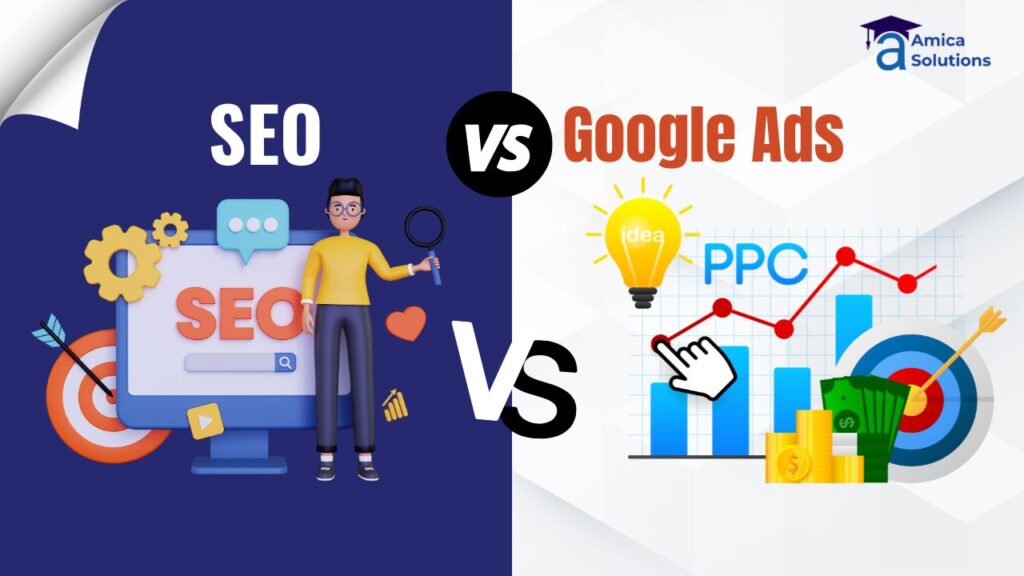
SEO vs. Google Ads: What’s the Better Long-Term Strategy?

You’ve probably heard this debate a hundred times already: SEO vs. Google Ads—which one actually works better in the long run? If you’re running a business, planning a startup, or just trying to make sense of digital marketing, you’ve probably asked yourself the same thing. And honestly, it’s not as simple as picking one and ignoring the other.

Let’s break it down, explore what both do, how they work, and figure out what might be a smarter long-term game.

So first... What even is SEO?

Alright. SEO, or Search Engine Optimization, is basically the art and science of getting your website to appear organically in search engine results. No ads, no money directly handed to Google—just your content, your authority, and your optimization working behind the scenes.

Some people think SEO is just about stuffing keywords, but no, it’s way more than that. Here’s what it usually involves:

  • Writing content people (and search engines) love
  • Optimizing your site speed and structure
  • Building backlinks
  • Using the right keywords (and using them smartly)
  • Keeping content updated and relevant

Now here’s the thing: SEO takes time. We’re talking weeks or months before you see real results. But when done right? It can keep bringing in visitors without you spending a dime on ads.

And what about Google Ads? Quick wins, anyone?

On the flip side, Google Ads are paid search ads that show up at the top of Google when someone types in what you’re offering. You bid on keywords, write a eye catching headline, and bam—you’re there on page one (if you outbid your competitors and have a good quality score, of course).

A few perks of using Google Ads:

  • Results? Pretty much immediate.
  • You can target super-specific audiences—location, age, device, time of day, even interests.
  • It’s great for product launches, offers, or testing new markets.

But there’s a catch—you stop paying, the traffic stops too. That’s the biggest contrast in this SEO vs. Google Ads match.

Let’s pause for a quick comparison

Aspect

SEO

Google Ads

Cost

Time & content investment

Pay-per-click (PPC)

Speed

Slow but steady

Fast and instant

Longevity

Long-term sustainability

Short-term visibility

Control

Depends on algorithms

Full campaign control

Trust

Users trust organic results

Sometimes skipped

Interesting, right? Both have their pros. Now let’s dive into each a bit deeper.

Why SEO might be your best long-term buddy

If you’re building something for the long term—like a brand, a blog, or an online store—then SEO can be your foundation. It helps you create credibility, especially if your content starts ranking on page 1.

A few things to love about SEO:

  • It compounds. The more content you create and optimize, the more Google loves you.
  • Evergreen content can bring traffic for years.
  • It builds domain authority—kind of like street credibility for websites.

But (there’s always a but), SEO isn’t a one-time thing. You need to keep working on it. Algorithms change. Competitors pop up. Still, when you compare SEO vs. Google Ads for staying power, SEO usually wins that round.

Still, Google Ads is not just about throwing money

Don’t dismiss it just yet. Google Ads can be a lifesaver when:

  • You need leads right now
  • You’re promoting a time-sensitive offer
  • Your niche is super competitive and organic ranking would take ages

Also, with smart bidding strategies, conversion tracking, and A/B testing, you can really fine-tune your ad performance.

Just be careful—costs can add up. If your keywords are competitive (like: “insurance” or “lawyer”), you might end up paying ₹100 or more per click. So yeah, it can be a bit intense.

Which is better for the long-term—SEO or Google Ads?

Here’s where it gets tricky. There’s no one-size-fits-all. If you ask SEO vs. Google Ads: who wins long-term?, the real answer is: depends on your goals.

Let’s say:

  • You’re a startup with no traffic → Google Ads can give you a jumpstart
  • You have a limited budget but can wait → SEO might be the better bet
  • You want sustainability and authority → Long-term SEO strategy is crucial
  • You want fast ROI → Google Ads could make more sense

But the smartest marketers often combine both. Start with Google Ads for quick visibility. In the meantime, build your SEO game so that over time, you can reduce your ad spend and rely more on organic traffic.

Tips to win at both

If you’re torn between the two, maybe try this mixed approach:

🟢 For SEO:

  • Focus on long-tail keywords
  • Keep your blog active
  • Optimize title tags and meta descriptions
  • Build backlinks naturally
  • Use tools like Ahrefs or Ubersuggest to spot content gaps

🔴 For Google Ads:

  • Set daily budgets to avoid surprises
  • Use negative keywords (so you don’t show for unrelated searches)
  • A/B test your ad copies
  • Monitor performance weekly
  • Link your ads to high-converting landing pages

Honestly, SEO vs. Google Ads isn’t a fight—it’s a balance.

Let’s wrap this up

To sum it all up:

  • SEO is like growing a tree. Slow but fruitful.
  • Google Ads is like renting a billboard. Fast but gone when the rent’s unpaid.
  • The best marketers don’t pick one. They use both at different times, for different goals.

In the long run, SEO gives you stability, trust, and cost-effectiveness. But if you’re launching, testing, or scaling fast? Google Ads might give you that push.

FAQs

Q: Is SEO cheaper than Google Ads?

Yes, over time. But the upfront investment in content and patience can be high.

Absolutely. That’s actually recommended.

Not directly, but the extra traffic can help you understand what content converts.

Start with Google Ads to get sales, then build SEO for long-term free traffic.

If you need quick visibility and leads, Google Ads is better short-term. For long-term growth and cost-effectiveness, SEO is more suitable. Ideally, use both strategically.

No, running Google Ads does not directly affect your organic SEO rankings. SEO and Ads are separate algorithms.

SEO usually takes 3–6 months to see significant traffic increases, while Google Ads can generate traffic almost immediately.

Not really. While you don’t pay per click like Google Ads, SEO requires investment in content creation, tools, and time.

Indirectly, yes. Ads can bring more visitors to your site, which may increase brand searches, backlinks, or engagement metrics—factors that can support SEO.

Your paid traffic will stop immediately. That’s why relying solely on ads isn’t a sustainable long-term strategy.

Yes. SEO can reduce your long-term cost per lead, build brand authority, and ensure consistent traffic even when ad budgets are paused.

Allocate a portion for quick wins (Google Ads) and the rest for long-term growth (SEO). A 60/40 split is common for new businesses, shifting toward SEO over time.

  • SEO: Google Search Console, Ahrefs, SEMrush
  • Google Ads: Google Ads Dashboard, Keyword Planner, Ubersuggest

Google Ads work well for both, but especially for products or urgent services where users are ready to convert immediately.


Helpful answers

Frequently Asked Questions

Is SEO or Google Ads better for long-term growth?

SEO is usually stronger for long-term organic visibility, while Google Ads can generate faster traffic and leads. Many businesses get better results by using both together.

Can SEO and Google Ads run at the same time?

Yes. Google Ads can bring immediate visibility while SEO builds authority, content depth, local relevance, and lower-cost organic leads over time.

How should a local business decide its Google Ads budget?

Start with service value, location, competition, conversion rate, and lead target. Then test campaigns, track calls and form leads, and increase budget only where results are measurable.

AS

Written and reviewed by

Amica Solutions Team

Amica Solutions is a digital marketing company in Dehradun working on SEO, Google Business Profile management, Google Ads, social media marketing, content marketing, website development, and lead generation for local businesses.

Scroll to Top