
What Is AIO, AEO and GEO? The New Rules of SEO in 2026 Explained
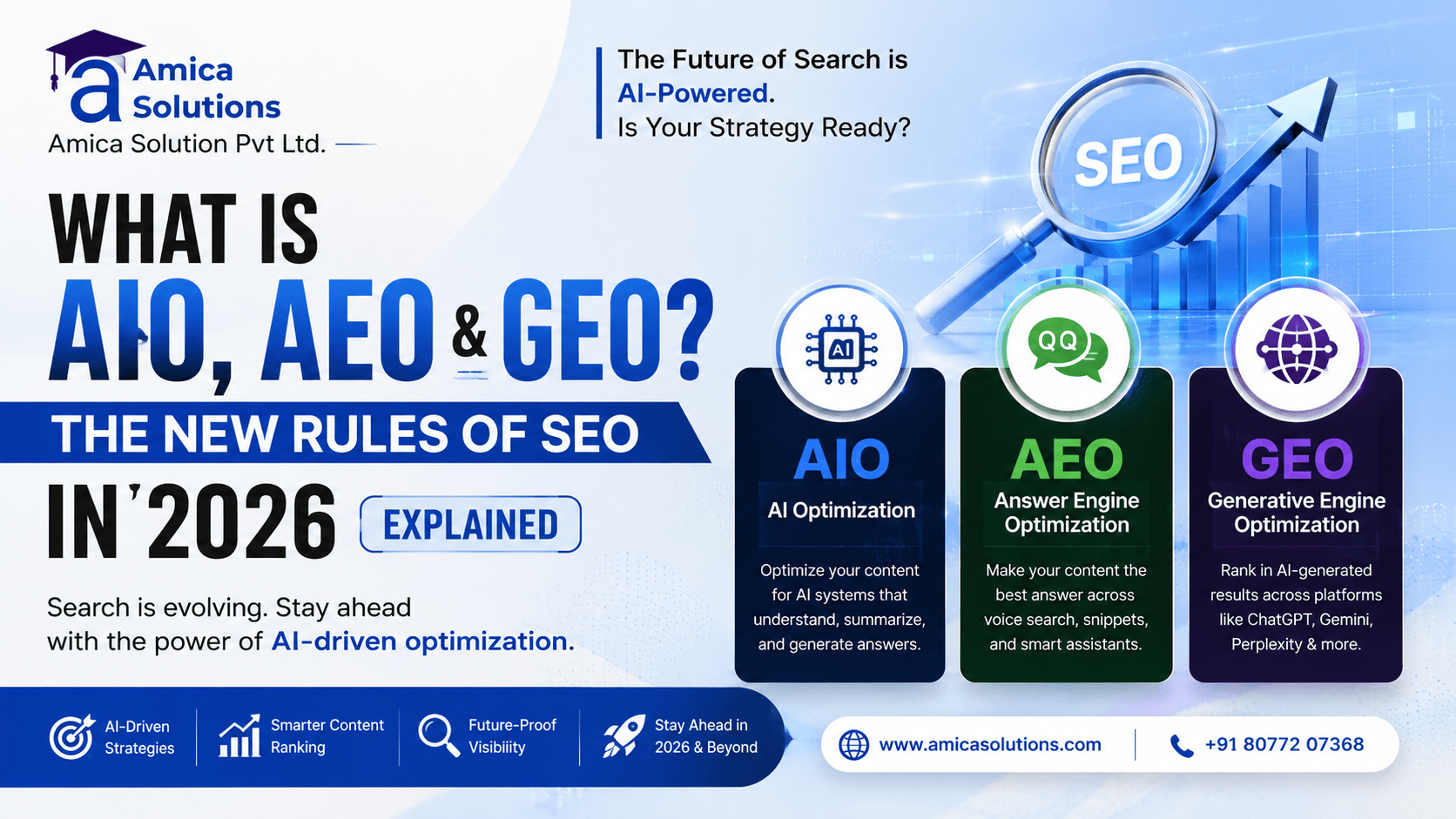
If you’ve been keeping up with digital marketing news lately, you’ve probably come across three new acronyms floating around: AIO, AEO, and GEO. They sound technical, but they describe something every business owner should actually care about — how your business shows up when people ask ChatGPT, Google AI Overviews, or Perplexity a question instead of typing it into a traditional Google search box.
Search behaviour is shifting. A growing share of people are getting their answers directly from AI tools, often without clicking through to a single website. That changes what “ranking” even means. This guide breaks down what AIO, AEO and GEO actually are, how they’re different from traditional SEO, and what your business can start doing about it.
Why Is Everyone Suddenly Talking About This?
For years, ranking on Google’s first page was the goal. But search itself has fragmented. People now ask questions directly to ChatGPT, Google’s AI Overviews, Perplexity, and Microsoft Copilot — tools that generate a single synthesized answer instead of a list of links to click through.
That means two things for businesses:
- Fewer people are clicking through to websites, even when your content ranks well.
- There’s a new opportunity — getting mentioned or cited by name inside an AI-generated answer, which is arguably even more valuable than a blue link, because it looks like a recommendation rather than an ad.
This is why marketers have started using new terms to describe optimizing specifically for this AI-driven layer of search.
What Is AEO (Answer Engine Optimization)?
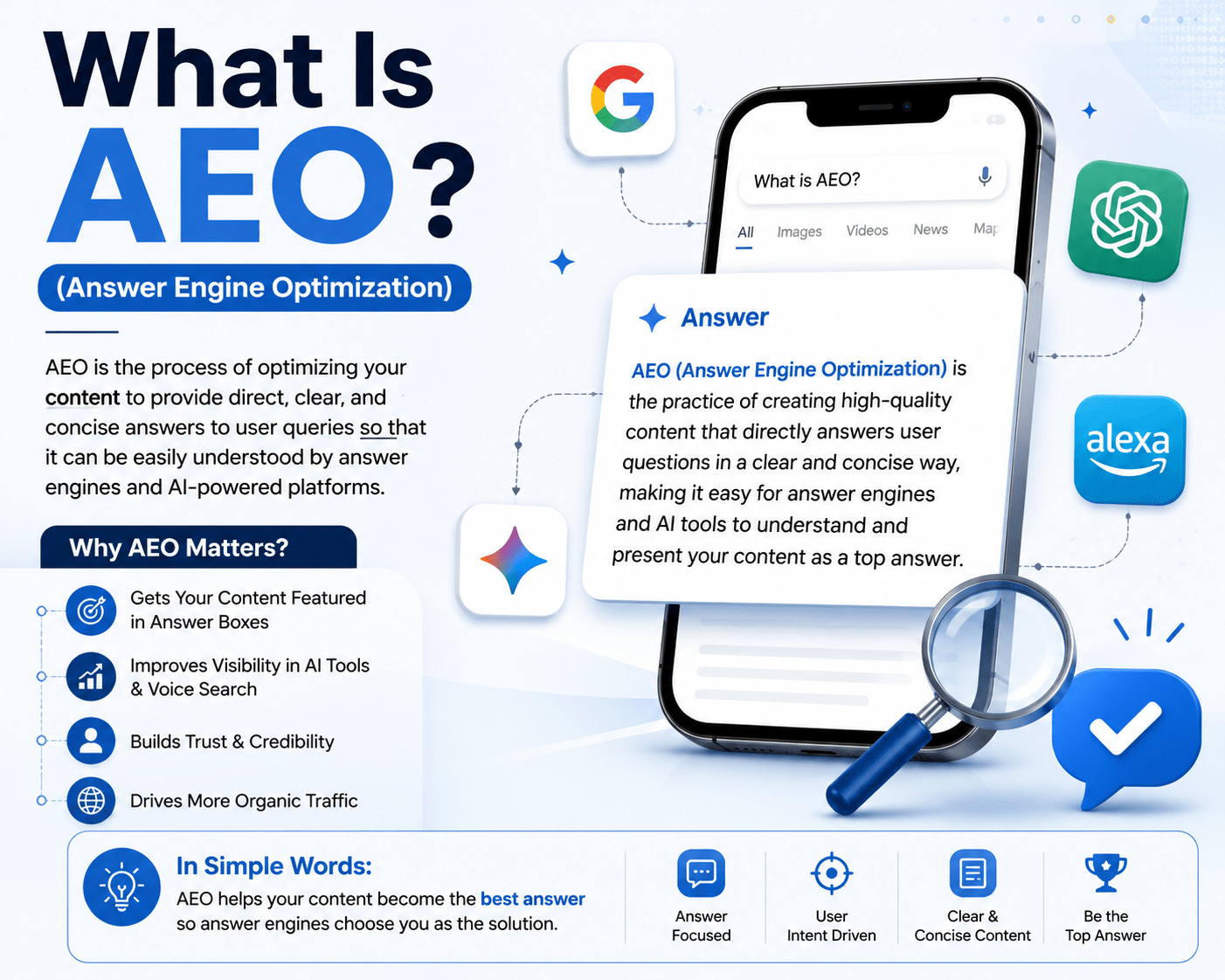
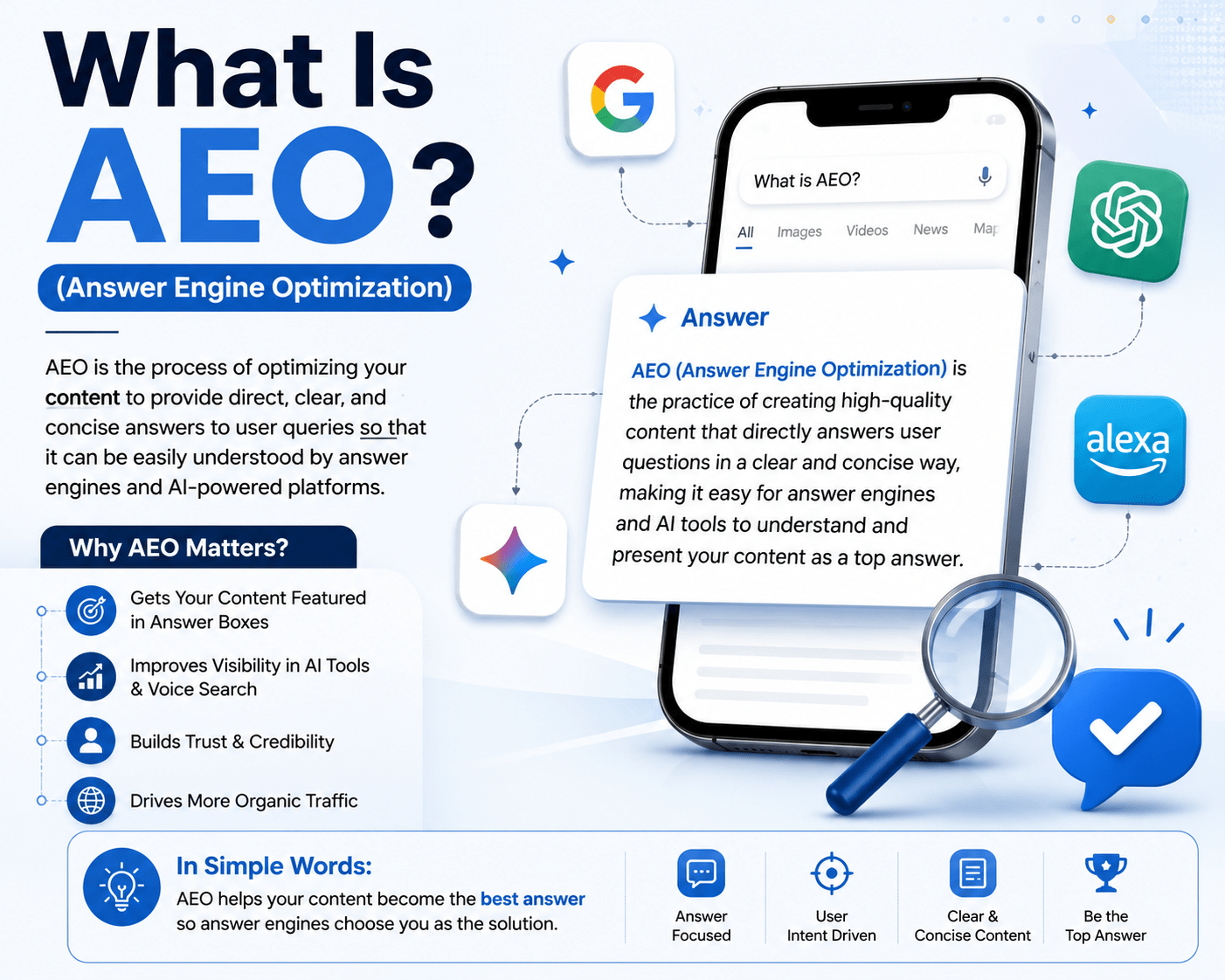
AEO stands for Answer Engine Optimization. It’s the practice of structuring your content so it can be pulled out and shown as a direct answer — whether that’s a Google featured snippet, a “People Also Ask” box, a voice assistant response, or an AI Overview at the top of the search results.
The goal of AEO isn’t just to rank well; it’s to become the answer itself. Think of it as the difference between being listed on the menu and being the dish the waiter recommends.
How to optimise for AEO:
- Answer the core question directly in the first 1–2 sentences after a question-style heading
- Use clear H2 and H3 headings phrased as real questions people ask
- Keep answers concise and self-contained, so they make sense even without surrounding context
- Add FAQ sections that mirror how customers actually phrase their questions
What Is GEO (Generative Engine Optimization)?
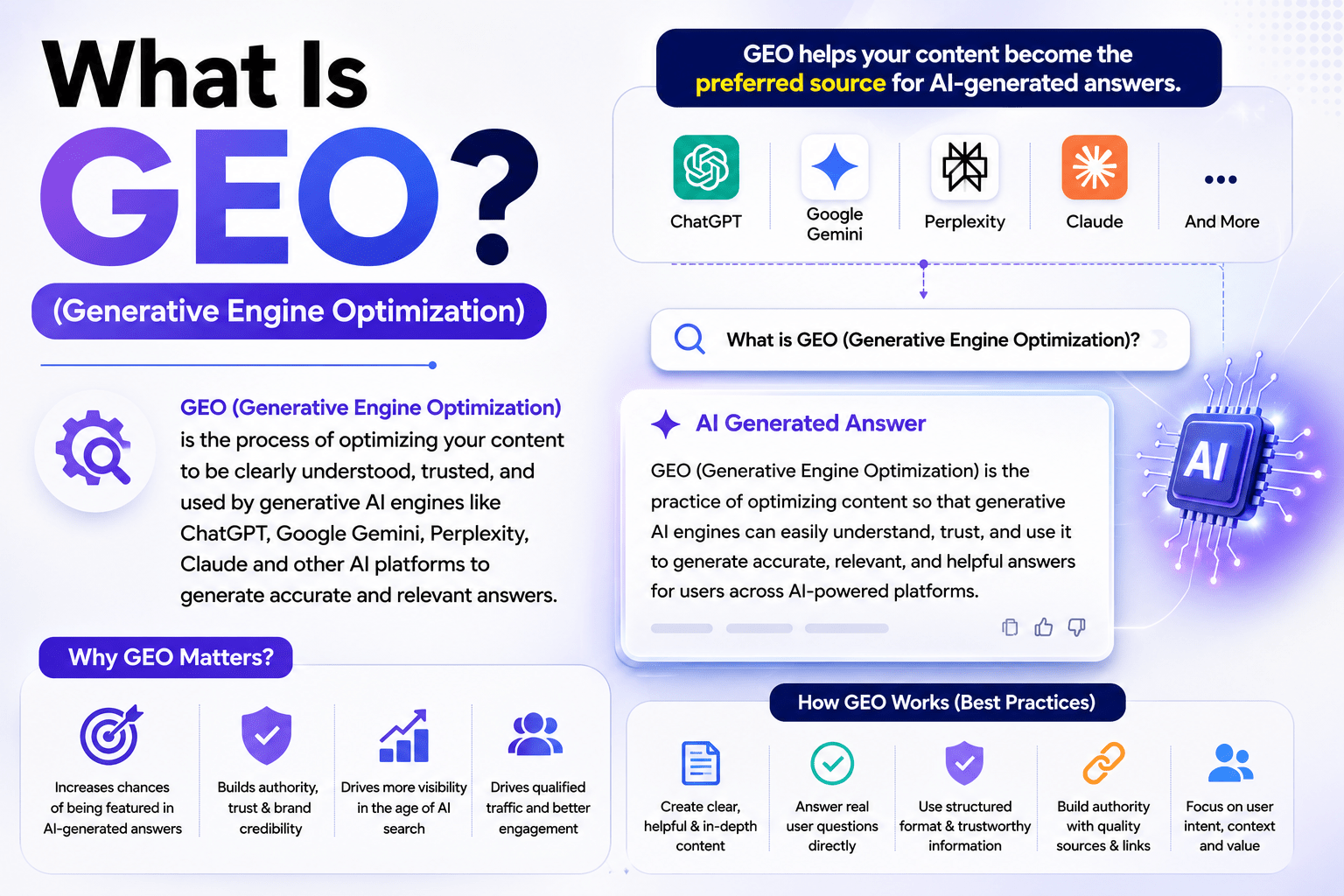
GEO stands for Generative Engine Optimization. While AEO is about being extracted as a direct answer, GEO is about being cited or referenced as a trusted source when tools like ChatGPT, Gemini, or Perplexity generate a longer, synthesized response.
Unlike a traditional search results page, generative engines pull from multiple sources at once and blend the information into one answer. GEO is about earning a place in that blend — being one of the sources the AI trusts enough to reference.
What tends to help with GEO:
- Original data, statistics, or case studies that AI systems can’t get anywhere else
- Clear, credible authorship and expertise signals
- Consistent information about your business across your website, directories, and social profiles, since AI systems cross-check for consistency
- Well-organised content with descriptive headings, schema markup, and logical structure that’s easy for a model to parse
What Is AIO (AI Optimization)?
AIO stands for AI Optimization, and it’s the broadest of the three terms. Rather than a single tactic, AIO refers to the overall trust and visibility signals — reviews, citations, brand mentions, consistent business information, and cross-platform presence — that build the foundation AI systems rely on before they’ll confidently reference your business at all.
Some practitioners use AIO specifically to mean optimizing for Google’s AI Overviews feature, so you may see the term used slightly differently depending on where you read it. Either way, AIO sits above AEO and GEO as the strategic umbrella that ties everything together.
AIO vs AEO vs GEO vs SEO: What's the Difference?
| Term | Focus | Goal |
|---|---|---|
| SEO | Ranking pages in traditional search results | Get clicks to your website |
| AEO | Structuring content to be extracted as a direct answer | Become the featured answer |
| GEO | Earning citations inside AI-generated responses | Be referenced as a trusted source |
| AIO | Overall AI trust and visibility signals | Build the foundation AI systems rely on |
The important thing to understand is that these aren’t competing strategies — they build on each other. Strong SEO fundamentals make AEO possible, and AEO plus consistent, authoritative content makes GEO possible. None of them work in isolation.
Does This Mean SEO Is Dead?
No — and this is worth saying clearly. Google’s own guidance on optimizing for generative AI features states plainly that optimizing for generative AI search is still fundamentally SEO. AI Overviews and generative answers still draw heavily from well-ranking, well-structured, technically sound content. If your website isn’t crawlable, fast, and genuinely useful, no amount of “AEO tricks” will help you show up in AI answers either.
What’s changed is the finish line. SEO used to end at “rank on page one.” Now it extends further — to “get referenced when someone asks an AI about your category.”
How Can a Local Business in Dehradun Actually Use This?
You don’t need a complicated strategy to start benefiting from AEO and GEO. A few practical, low-effort steps go a long way:
- Add a genuine FAQ section to your key pages. Phrase questions the way real customers ask them — “How much does a wedding photographer cost in Dehradun?” rather than generic headings.
- Answer the question immediately, then elaborate. AI tools favour content that states the answer clearly in the first sentence or two, rather than making readers scroll for it.
- Keep your business information consistent everywhere. Your name, address, phone number, and service details should match exactly across your website, Google Business Profile, and social pages — inconsistency makes AI systems less confident about citing you.
- Use schema markup. FAQPage, LocalBusiness, and Service schema help both traditional search engines and AI crawlers understand your content correctly.
- Publish something genuinely original. A local price guide, a real case study, or original data from your own business gives AI tools a reason to cite you specifically, instead of a generic competitor.
- Check how you currently show up. Periodically ask ChatGPT, Perplexity, or Google AI Overviews questions your customers would ask, and see whether your business gets mentioned at all.
Common Misconceptions About AEO and GEO
- “I need to create special AI text files for my site.” Google has specifically said this isn’t necessary — its systems don’t rely on special AI-only markup files to understand or cite your content.
- “Keyword stuffing will help AI notice me more.” It does the opposite. Research on generative engine visibility has found that unnatural keyword stuffing actually reduces the chance of being cited, while expert quotes, real statistics, and clear sourcing improve it.
- “AEO and GEO replace SEO.” They don’t. They sit on top of solid SEO. A technically weak, poorly structured website won’t perform well in AI search either.
- “Results are guaranteed.” No agency or tool can guarantee placement in an AI-generated answer. Anyone claiming otherwise is overselling what’s still an evolving, largely unpredictable area of search.
Final Thoughts
AIO, AEO and GEO aren’t replacing SEO — they’re extending it into a new layer of search that didn’t exist a few years ago. The businesses that get ahead in 2026 won’t be the ones chasing every new acronym, but the ones that keep building genuinely useful, well-structured, and trustworthy content — the same foundation that’s always driven good , now stretched across a wider set of places customers go looking for answers.
If you’re not sure whether your website is set up to appear in AI search results, Amica Solutions can review your current content and structure and show you exactly where the gaps are.
Frequently Asked Questions
What does AEO stand for?
AEO stands for Answer Engine Optimization — structuring content so it can be extracted and shown as a direct answer in search features, voice assistants, and AI tools.
What does GEO stand for?
GEO stands for Generative Engine Optimization — optimizing content so AI tools like ChatGPT, Gemini, and Perplexity cite it as a source when generating answers.
Is GEO the same as SEO?
No, but they’re closely connected. SEO builds the technical and content foundation, while GEO focuses specifically on earning citations inside AI-generated responses.
Do small local businesses need to worry about AEO and GEO yet?
It helps to start early. Adding clear FAQs, consistent business information, and well-structured content costs little extra effort and prepares your business for a search landscape that’s shifting toward AI-driven answers.
How do I know if my business is showing up in AI search results?
The simplest method is manual testing — ask ChatGPT, Perplexity, and Google AI Overviews the kinds of questions your customers would ask, and see whether your business is mentioned.
Contact Us
Recent Posts


Written and reviewed by
Amica Solutions Team
Amica Solutions is a digital marketing company in Dehradun working on SEO, Google Business Profile management, Google Ads, social media marketing, content marketing, website development, and lead generation for local businesses.
- Office: Laxmi Tower, Near Sahastradhara Road, B Block, Aman Vihar, Dehradun, Uttarakhand 248001
- Phone: +91 9411339575
- Email: contact@amicasolution.com