Google Maps Competitor Analysis for Local Businesses: Compare Yourself with the Top 3 (2026)
By the Amica Solutions Team · Published 19 November 2026 · Google facts checked 19 November 2026 against Google’s own Help pages. Amica Solutions builds Amica Directory and these free tools, so the screenshots are from our own tools and our own listing.
For Google Maps competitor analysis, search your main keyword from where your customers are and compare the top 3 with you on rating, review count, review freshness, primary category and website. The biggest gap is usually reviews. Copy what is allowed, report keyword-stuffed names, and never copy rule-breaking tricks.
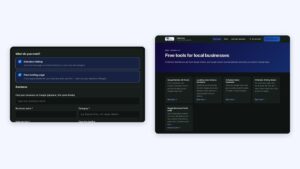
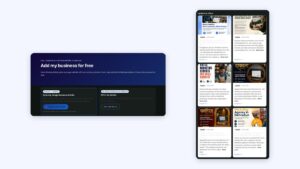
You vs the top 3 (other names blurred by us) and the rank grid, from our own audit. Screenshots: Amica Directory, 19 Nov 2026.
It is easy to feel that the businesses above you are just lucky. Usually they are not; they have more reviews, a sharper category or a better website. A ten-minute comparison shows which.
Key takeaways
Compare with the top 3 for your real keyword.
Rating, reviews, freshness, category, website.
Our gap: 78 reviews vs 406.
Report keyword-stuffed names; do not copy them.
The free audit does this comparison for you.
How do you compare yourself with Google Maps competitors?
Search your main keyword on Google Maps from where your customers are, note the top 3 businesses, and compare five things.
Compare
Where to see it
What it tells you
Rating
Next to the name
Customer satisfaction
Number of reviews
Next to the rating
Prominence; often the biggest gap
Newest review date
Reviews tab, sorted by newest
Whether reviews keep coming
Primary category
Under the name
Relevance to the keyword
Website
Profile buttons
Whether Google can read more about them
Google says local ranking uses relevance, distance and prominence (Google Business Profile Help). Your comparison shows which of these you are losing on.
What did our own comparison show?
Our own comparison, for “digital marketing company” around our office:
Business
Rating
Reviews
Website
Amica Solutions (us)
4.9
78
Yes
Competitor A
4.9
406
Yes
Competitor B
5.0
52
Yes
Competitor C
4.8
81
Yes
Same rating as the leader, but about one-fifth of the reviews. That told us exactly where to work: a steady flow of new, honest reviews. The report also noticed that two competitors had added keywords to their business names.
You vs the top 3 near you (other businesses’ names blurred by us). Screenshot: Amica Directory, 19 Nov 2026.
What should you copy, and what not?
Copy what is allowed; report what is not. Google’s guidelines say “Including unnecessary information in your business name isn’t permitted” and that address lines should not include keywords (Google guidelines). If a competitor ranks with a keyword-stuffed name, you can suggest an edit on their Maps listing. Do not copy it; a profile can be suspended for it.